
When you’re designing or sourcing a custom plush toy, the plush toy filling you choose quietly determines almost everything — how the toy feels in a child’s hands, how it holds its shape after years of use, how it passes safety inspections, and ultimately how much it costs to produce. Yet filling is one of the most overlooked decisions in the entire development process.
This guide breaks down every major plush toy filling option available today, with honest comparisons so you can match the right material to your product requirements.
Why Plush Toy Filling Matters More Than Most Buyers Realize
The outer fabric gets all the attention, but the stuffing material inside defines the tactile experience. A beautifully printed minky shell stuffed with low-grade fill will feel hollow, lumpy, or collapse after a few washes. Getting the fit right is what separates a product that earns repeat customers from one that ends up returned.
Beyond feel, filling directly impacts child-safety compliance, wash-and-care durability, shipping weight, and unit production cost — all critical variables in any custom plush project.
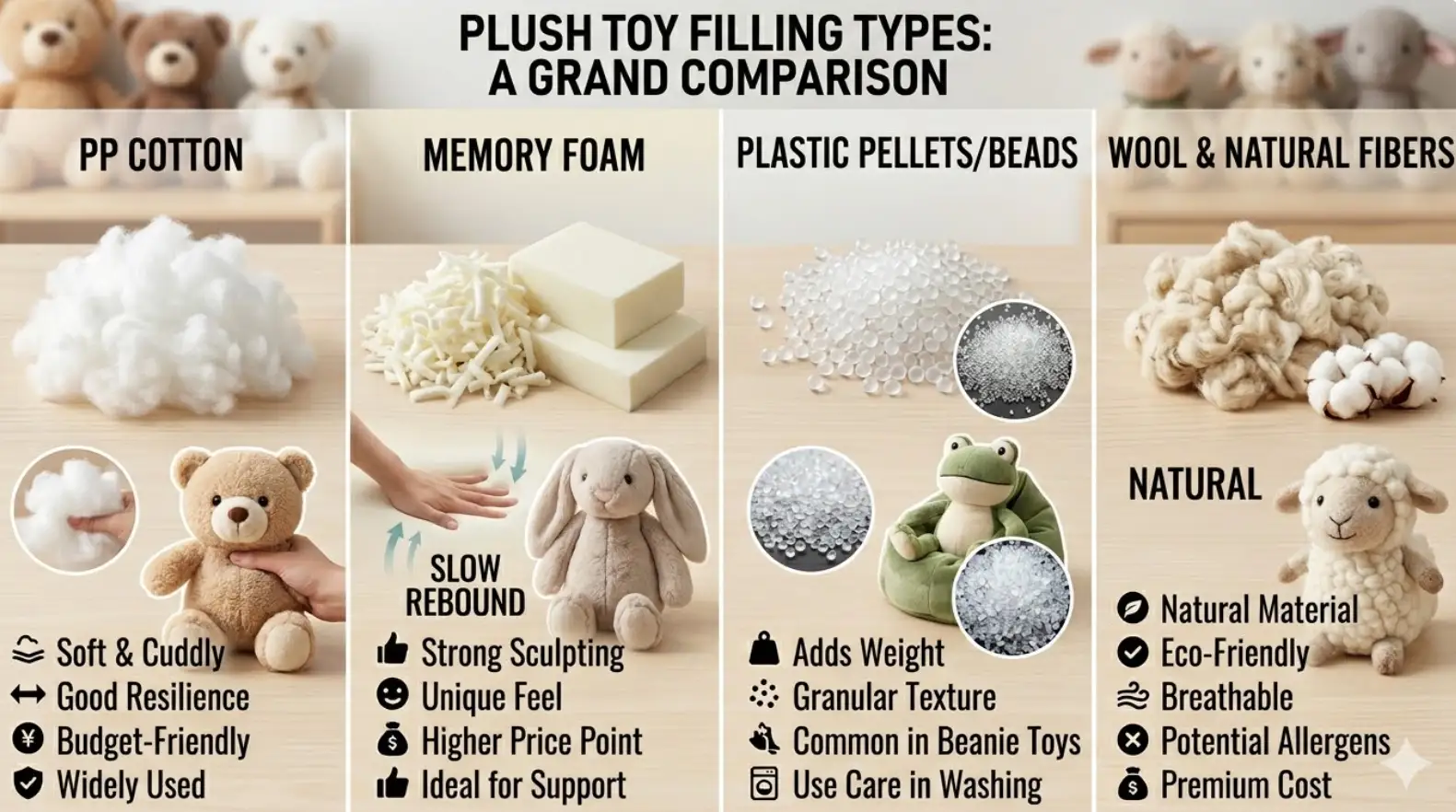
The Main Types of Plush Toy Filling Compared
| Filling Type | Feel & Softness | Shape Retention | Safety Profile | Cost Level | Best For |
|---|---|---|---|---|---|
| PP Cotton (Polyester Fiberfill) | Soft, fluffy | Good (degrades over time) | ASTM / EN71 compliant | Low | Standard plush, kids’ toys |
| Memory Foam | Firm, slow-rebound | Excellent | Varies by grade | Medium–High | Premium plush, novelty pillows |
| Bean Fill (PVC/PE pellets) | Weighted, flexible | Low (conforms to shape) | Requires enclosed lining | Low–Medium | Beanbag-style, weighted toys |
| Cotton Batting | Natural, dense | Medium | Hypoallergenic options available | Medium | Eco-conscious or organic lines |
| Recycled Fiberfill (RPET) | Similar to PP cotton | Good | Certifiable (OEKO-TEX) | Low–Medium | Sustainable product lines |
| Wool Fill | Dense, warm | Good | Natural, fire-resistant | High | Premium, artisan plush |
| Foam Chips / Shredded Foam | Chunky, adaptable | Low–Medium | Depends on foam grade | Low | Large decorative plush, floor toys |
PP Cotton (Polyester Fiberfill) — The Industry Standard
PP cotton, also known as polyester fiberfill or polyfill, is the most widely used plush toy filling in the global toy manufacturing industry. It is made from fine polyester fibers that are carded and crimped to create a light, airy structure that compresses easily and springs back.
Key properties:
- Hypoallergenic and non-irritating to skin
- Lightweight, which reduces shipping costs
- Available in multiple fill densities (measured in grams per toy)
- Machine washable in most configurations
- Easy to process on high-volume production lines
The main drawback is clumping over time. After repeated washing or compression, standard PP cotton can bunch and lose its even distribution. Higher-grade siliconized fiberfill — where each fiber is coated with a silicone lubricant — resists clumping significantly better and is recommended for any plush that will see heavy daily use.
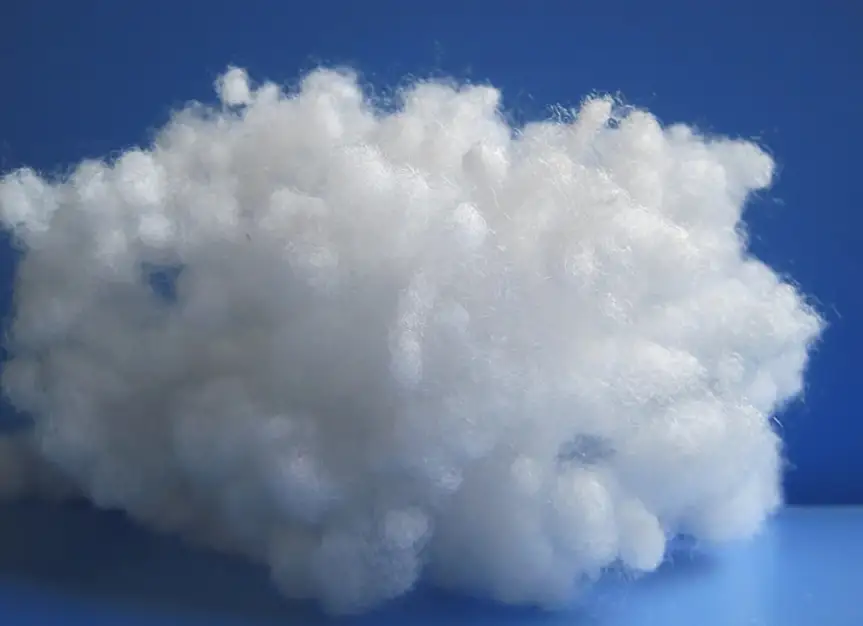
Fill weight is a critical spec to define with your factory. A 20 cm plush toy might use 40–80 g of PP cotton depending on the desired firmness. Under-stuffed toys feel cheap; over-stuffed toys become rigid and uncomfortable.
Memory Foam — The Premium Plush Toy Filling Option
Memory foam filling is gaining traction in the custom plush space, particularly for novelty pillows, large plush cushions, and brand mascot toys designed for adult consumers. The material — formally known as viscoelastic polyurethane foam — responds to body heat and pressure, creating a slow, satisfying rebound that feels distinctly different from fiberfill.
Because memory foam is sold in sheets or blocks, it is typically cut to shape inside the plush shell rather than loose-filled. This adds a step to production but results in a toy that maintains its form precisely across its entire lifespan.
The tradeoff is cost and weight. Memory foam is denser and heavier than PP cotton, which increases both material cost and shipping expense. It also requires careful chemical safety testing — foam grades vary widely, and only certified low-VOC, non-toxic formulations should be used in any toy intended for children under 14.
Bean Fill — Weighted, Flexible, and Popular
Bean fill refers to small plastic pellets — typically PVC granules or PE beads — used as a plush toy filling to create a weighted, flexible feel. Toys filled with beans conform to whatever surface they rest on and have a satisfying heft that makes them popular for stress-relief toys, desk companions, and beanbag-style characters.
| Bean Fill Type | Weight | Safety Note |
|---|---|---|
| PVC pellets | Heavy | Requires inner lining; not for children under 3 |
| PE beads | Medium | Softer, safer grade; still requires lining |
| Glass beads | Heavy | Adults only; high-end weighted toys |
| Polypropylene granules | Light–Medium | Widely compliant; common in export products |
Because pellets can escape through seam gaps, bean-filled toys must use a double-lining system — an inner sealed pouch holds the fill, and the outer shell is sewn over it. This is a non-negotiable requirement for any product targeting markets with strict toy safety standards, including the US, EU, and Australia.
Recycled Fiberfill (RPET) — The Sustainable Choice
Recycled polyester fiberfill, commonly called RPET fill, is manufactured from post-consumer plastic bottles that are cleaned, melted, and extruded into polyester fibers. The resulting material performs nearly identically to virgin PP cotton in terms of feel and fill behavior, but carries a meaningfully lower environmental footprint.
For brands building an eco-friendly plush toy line, RPET fill is the most commercially viable option. It can be certified under OEKO-TEX Standard 100, GRS (Global Recycled Standard), and GOTS (for blends), giving your supply chain documentation that supports sustainability marketing claims.
| Certification | What It Covers | Useful For |
|---|---|---|
| OEKO-TEX Standard 100 | Harmful substance limits | Any children’s toy market |
| GRS (Global Recycled Standard) | Recycled content verification | Eco/sustainability claims |
| ASTM F963 | US toy physical & mechanical safety | US retail |
| EN71 | EU toy safety directive | EU retail |
According to data from the global nonwovens and fiberfill sector, the recycled polyester fiber market was valued at approximately USD 9.8 billion in 2023 and is projected to grow at a CAGR of around 8.5% through 2030, driven in large part by demand from the toy and home textiles industries.
Brands that build RPET into their product specs today are positioning ahead of what is rapidly becoming a baseline expectation in the EU and US markets.
Cotton Batting and Wool Fill — Natural Alternatives
Cotton batting offers a denser, more natural alternative to polyester fill. It does not rebound as readily as PP cotton, so it works best in flatter plush toys, appliqué designs, or organic toy lines where a firmer hand is acceptable. Certified organic cotton batting (GOTS-certified) commands a price premium but supports a clean ingredient story for health-conscious parent demographics.
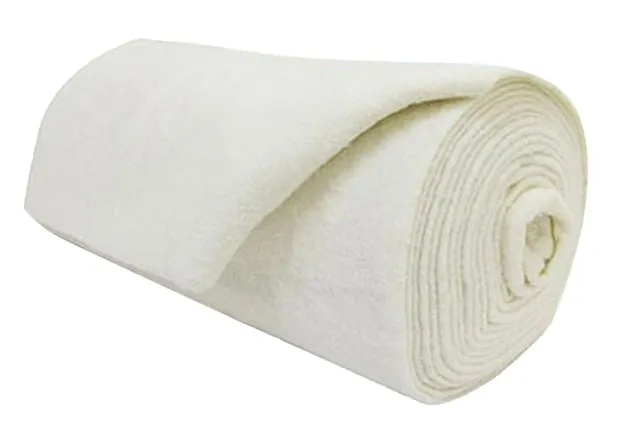
Wool fill is rare in mass production but used in premium artisan plush, particularly in markets like Germany, Japan, and Scandinavia. Wool is naturally flame-resistant, breathable, and hypoallergenic for most users. Its cost — typically 4–6× that of standard PP cotton per kilogram — limits its application to high-margin, small-batch products.
How to Choose the Right Plush Toy Filling
The global custom plush toy market reached an estimated value of USD 12.4 billion in 2023, with the premium and licensed character segment accounting for the fastest-growing share.
Industry sourcing data consistently shows that fill specification errors — incorrect density, non-compliant materials, or inadequate lining for bean-fill products — rank among the top three causes of failed pre-shipment inspections in the soft toy category.
Choosing the right plush toy filling comes down to four decision points:
- Target age group — Under 3 years requires strict material compliance (no small pellets, certified non-toxic fill only)
- Desired feel — Soft and huggable favors PP cotton or siliconized fill; weighted and desk-friendly favors bean fill; premium and long-lasting favors memory foam
- Sustainability goals — RPET fill is the most practical swap with minimal production adjustment
- Budget and MOQ — PP cotton and RPET are the most cost-efficient at scale; wool and memory foam carry significant unit cost premiums
Work with your factory to specify fill weight in grams, fill grade (standard vs. siliconized), lining requirements for pellet fills, and the relevant testing standard for your target market before prototype approval. These specs, locked in writing, protect you from inconsistency across production runs.
Plush toy filling types compared—such as PP cotton, memory foam, and other materials—highlight how Zestful World Toys optimizes softness, resilience, and safety to meet diverse comfort and durability needs in modern plush products.
Getting the fill right is one of the highest-leverage decisions in custom plush development. The right plush toy filling doesn’t just make a toy feel good on day one — it determines whether your product holds up, passes inspection, and builds the kind of trust that turns first-time buyers into repeat customers.